A punctured tyre can usually be repaired if the injury is in the central tread area, no larger than 6 mm, and the tyre was not driven flat. Sidewall or shoulder damage cannot be repaired. A proper repair removes the tyre and uses a plug and patch from the inside.
A punctured tyre can usually be repaired if the damage is in the central tread area, is no larger than 6 mm across and the tyre was not driven while flat. Damage to the sidewall or shoulder cannot be safely repaired. A correct repair means taking the tyre off the wheel and sealing it from the inside with a plug and patch.
This is one of the most useful things a driver can know, because it can save you the cost of a new tyre and stop you from trusting a repair that should never have been done. Here is how I decide.
When can a tyre puncture be repaired?
The US Tire Manufacturers Association publishes clear repair limits, and they are a good standard to follow. All of these need to be true:
- The injury is in the tread area, away from the shoulder.
- It is 6 mm or smaller in diameter.
- It does not overlap an existing repair.
- The tyre was not driven flat or badly under-inflated, which can destroy the inner structure.
- The inside looks sound once the tyre is off the rim.
- There is enough tread left. A worn-out tyre is not worth repairing.
If any of these fails, the tyre should be replaced. Our puncture repair service follows this approach, and a tyre that cannot be repaired can go straight to tyre replacement.
Repair or replace? A quick guide
| What you found | Usually repairable? | What to do |
|---|---|---|
| Nail or screw in central tread | Yes, if within limits | Book a proper repair |
| Hole bigger than 6 mm | No | Replace the tyre |
| Damage near the shoulder | No | Replace the tyre |
| Cut or hole in the sidewall | No | Replace the tyre |
| Sidewall bulge | No | Stop driving, change the tyre |
| Tyre driven flat for some distance | Often no | Inspect from the inside |
| Older repair overlapping the new hole | No | Replace the tyre |
| Valve leak | Not a puncture | Replace the valve |
| Tyre near or past its age limit | Not worthwhile | Replace it |
What is the right way to repair a puncture?
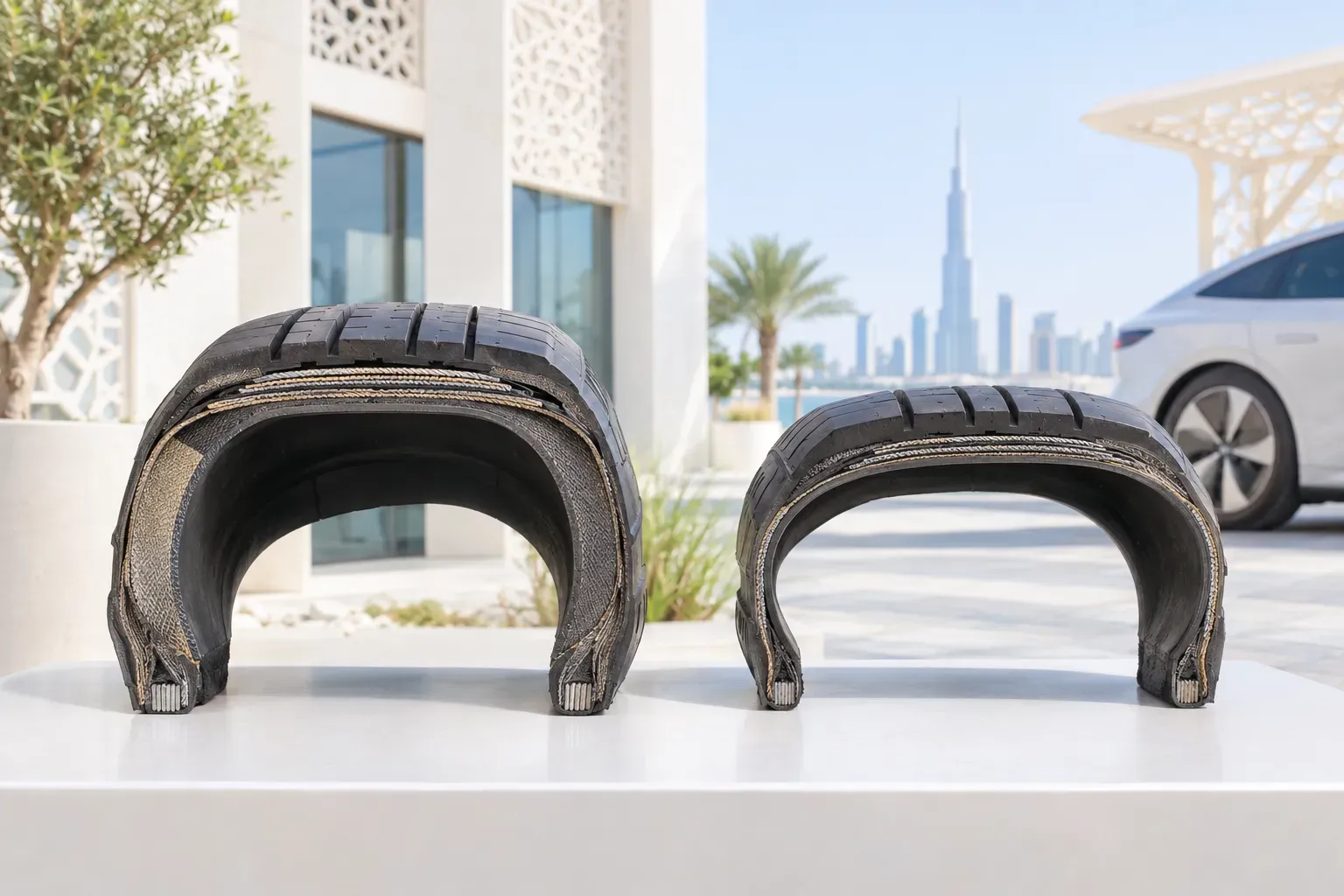
A safe repair has two jobs: fill the hole and seal the inner liner. USTMA is clear that a plug alone is an unacceptable repair, and that a stem or plug must fill the injury while a patch seals the inside. A one-piece combined unit does both.
A proper repair usually goes like this:
- Mark the injury, remove the wheel and take the tyre off the rim.
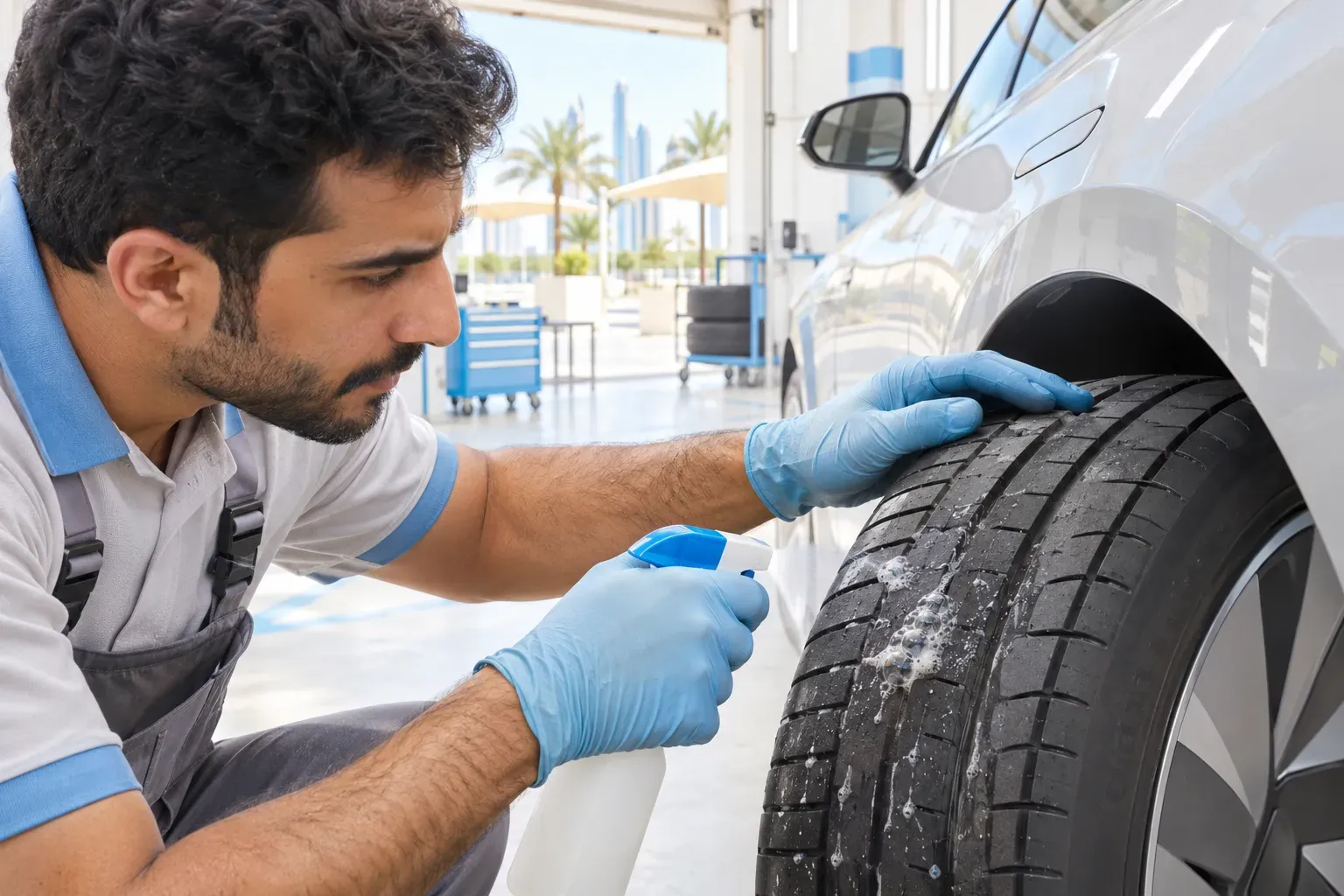
- Inspect the inside for hidden damage.
- Remove the object and clean the injury channel.
- Prepare the inner liner.
- Fit the repair unit so that it fills the hole and seals the inside.
- Refit the tyre, inflate it to the correct pressure and check for leaks.
- Balance the wheel. Learn why in my alignment vs balancing guide.
The quick external plug you may see at the roadside can get you moving in an emergency, but it should not be treated as a permanent fix. It does not allow anyone to inspect the inside of the tyre.
Can a nail in a tyre be repaired?
In most cases, yes. A nail or screw puncture in the middle of the tread is the classic repairable injury. If the tyre is still holding pressure, leave the object where it is. It is often the only thing sealing the hole. Drive gently to a repair point, or request our mobile tyre service so that a technician comes to you.
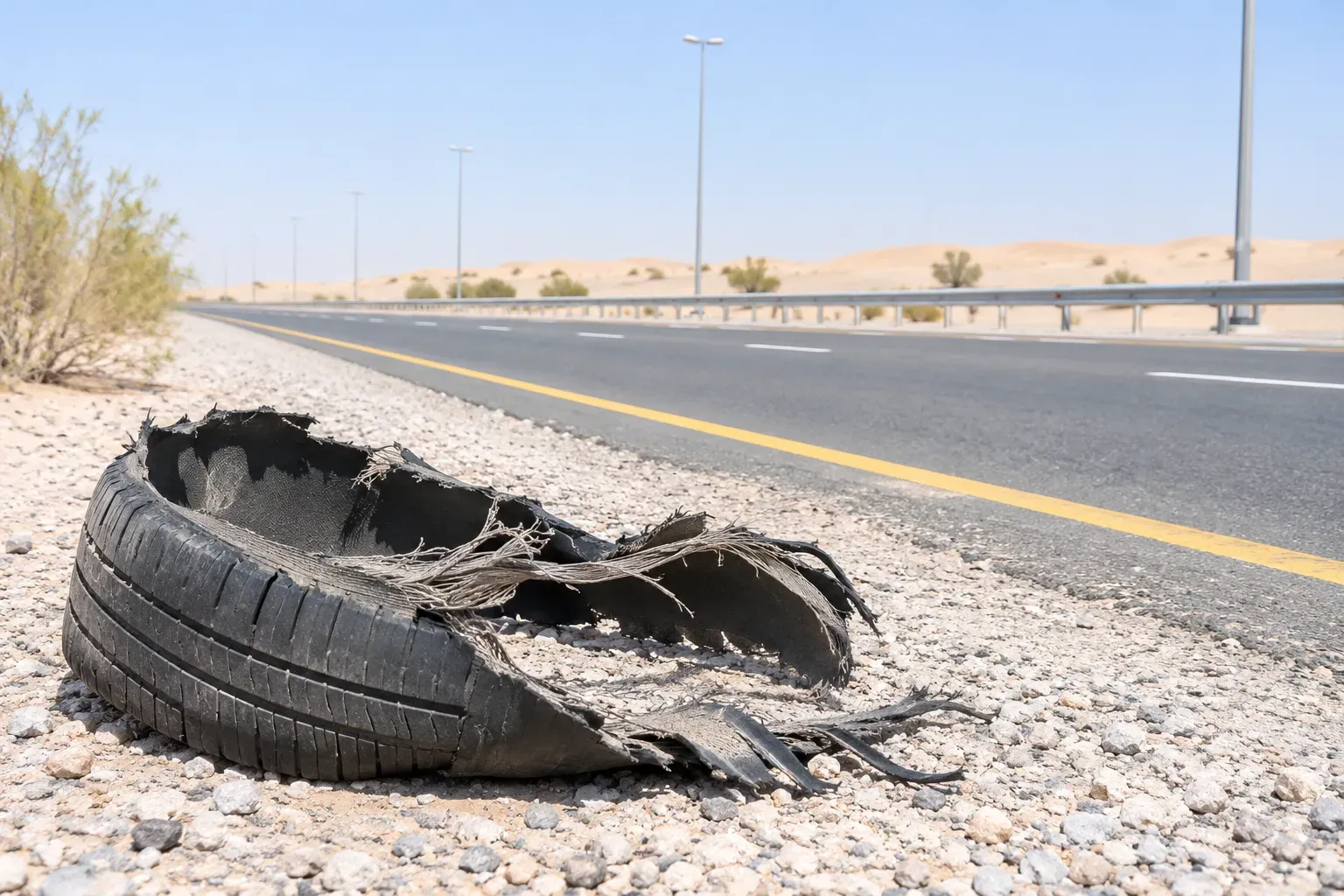
If it is losing air quickly or is already flat, do not drive on it. Even a short distance can damage the sidewall and turn a cheap repair into a replacement.
What should you do when you get a flat?
Your safety comes first, especially on fast UAE roads:
- Switch on your hazard lights and move off the carriageway when it is safe.
- Park on firm, level ground, well away from traffic.
- Stand behind a barrier if there is one, and do not stay in the car on a hard shoulder.
- In an emergency or if you are in a dangerous spot, call 999.
- Fit your spare only if you can do it safely, or call for help.
We provide a flat tyre service and 24-hour tyre repair in Dubai for when this happens. To find help quickly, you can also use our puncture repair near me page. Check your spare tyre from time to time so you are not caught out by a flat or expired spare.
Can run-flat tyres be repaired?
Sometimes. Because a run-flat can keep moving with no air, its internal structure may have been damaged without any obvious sign. Michelin’s guidance says repair may be possible if the injury is in the repairable zone and the tyre has not been run below the minimum pressure for an extended time. It must be inspected by a qualified technician. Check your tyre manufacturer’s policy too. There is more on this in run flat vs normal tyres.
Can EV tyres be repaired?
Yes, the same basic limits apply. EVs do bring a few extra considerations. Many carry only a sealant kit, some tyres have foam lining that has to be dealt with, and the car must be lifted at the correct points. If you have used sealant, tell the technician before they begin. Our EV tyre service covers these details, and my guide to Tesla tyre replacement has model-specific advice.
How long does a tyre repair last?
A properly done repair in the right place is intended to be a lasting one, so the tyre can continue in service until it reaches its normal tread or age limit. It is still worth checking the pressure after a day or two to make sure the repair is holding.
Keep in mind that a repaired tyre does not reset the clock on its age. If it is close to five years old, read how long tyres last in the UAE before spending money on it.
Is tyre sealant a permanent repair?
No. Sealant from an emergency kit is meant to get you to a place where the tyre can be inspected. Drive gently, follow the kit’s speed and distance limits, and tell the technician you used it. They will need to clean it out before assessing the tyre.
Get your puncture looked at
If you are not sure whether your tyre can be saved, send a clear photo of the damage. We can tell you what is likely, and confirm it once the tyre is off the rim. We help drivers across Dubai, Abu Dhabi and Sharjah.