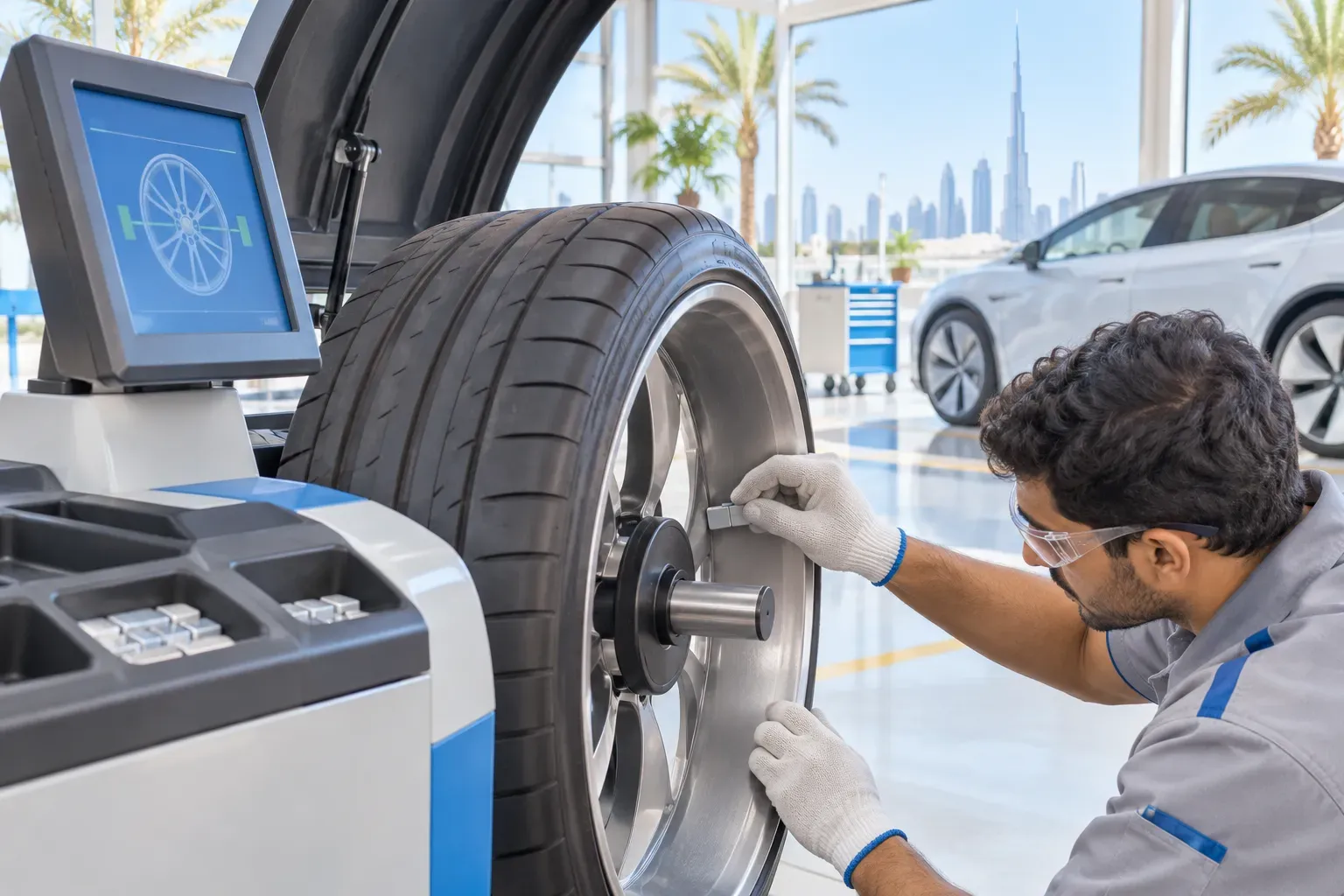
Signs your wheels need balancing
The classic sign is a shake through the steering wheel that appears at a certain speed, often on the highway, and fades when you go faster or slower. If the shake is mainly in your seat, the imbalance is more likely to be in the rear wheels.
Over time, an unbalanced wheel creates patchy, scalloped wear on the tread. It also adds stress to wheel bearings and suspension parts, so a small job left undone can become more expensive.
- Steering vibration at highway speed
- Seat or floor vibration
- Patchy tread wear
- A weight missing from the rim
Balancing or alignment: which do you need?
Balancing deals with weight around the wheel and fixes vibration. Alignment deals with the angles of the wheels and fixes pulling to one side or an off-centre steering wheel.
The two are often confused, and a car can need one, the other or both. If you describe the symptom, we can point you to the right service so you do not pay for work you do not need.
When to balance your wheels
Balance a wheel whenever a tyre is fitted or removed from its rim, including after a puncture repair. It is also sensible at each tyre rotation if you notice any vibration.
After a hard hit on a pothole or kerb, a weight can fall off or the rim can bend. If vibration starts right after an impact, have the wheel checked for damage as well as balance.
Sand, mud and desert driving
Packed sand or mud on the inside of a rim can throw the balance off and cause a sudden shake after a desert trip. Before booking, try washing the inner rim thoroughly, because this is often all it takes.
If you regularly drive off-road, ask for weights that suit your rims and check them after each trip. Clip-on weights can be knocked off by rocks, and sand can loosen them over time.
What is included
- Wheel cleaned and checked
- Computerised dynamic balance
- Clip-on or adhesive weights
- Rim run-out check
- Refit to torque spec
How it works
- Remove the wheel. The wheel is taken off and old weights are removed.
- Spin on the machine. A balancer measures heavy spots on both sides of the rim.
- Add weights. Small weights are placed precisely to cancel the imbalance.
- Recheck and refit. The wheel is spun again, then refitted to the right torque.
What affects the final price
The figure above is a starting price, not a final quote.
- Rim size
- Number of wheels
- Adhesive or clip-on weights
- Heavy SUV or EV wheels
If you drive an EV
With no engine noise to mask it, small vibrations are easier to feel in an EV. Large, heavy wheels benefit from precise balancing and hidden adhesive weights on alloys.