In the UAE, replace tyres within five years of their manufacture date, even if they look fine. Mileage varies widely, often around 30,000 to 60,000 km for road tyres, and can be lower on EVs or performance cars. Replace sooner if tread reaches 1.6 mm or you see cracks or bulges.
In the UAE, plan to replace your tyres within five years of the date they were made, even if they still look good. In terms of distance, many road tyres last somewhere around 30,000 to 60,000 km, but that range is wide because the car, the driver and the heat all change the result. Whichever limit you reach first is the one that counts.
I check tyres every working day, and the most common surprise is a set with plenty of tread that is too old to trust. Tyres age from the day they leave the factory, and our climate speeds that up. Here is how to work out how much life your tyres have left.
How long are tyres valid in the UAE?
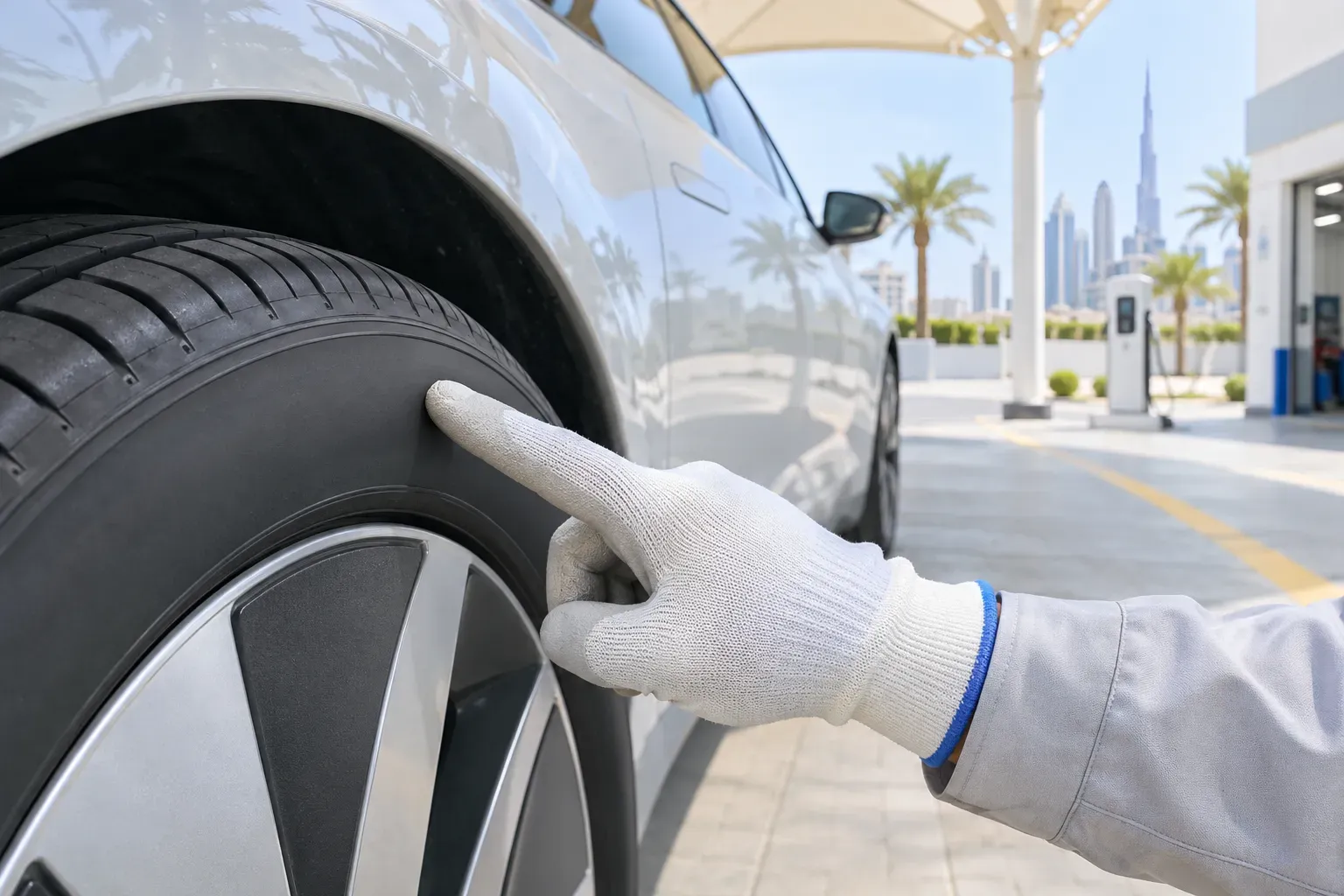
The rule most UAE drivers know is five years from the manufacture date. It applies whether the tyre was used or sat unused in a warehouse, so a tyre made two years ago has already used up part of its life before you buy it. You can read that date from the DOT code on the sidewall, and my step-by-step guide shows how to check tyre expiry date.
Requirements at vehicle testing can change, so if you are close to the limit and your registration renewal is coming up, ask your testing centre directly. Do not leave it until the morning of the test.
Worn or unfit tyres can also cost you on the road. Khaleej Times reports that under the Federal Traffic Law, driving with unfit tyres carries a Dh500 fine, four black points and a seven-day vehicle impoundment.
Can tyres last 60,000 km?
Yes, some can, but do not treat that as a promise. It is more realistic for a touring tyre on a lighter car that is driven smoothly, kept at the correct pressure and rotated on schedule. The typical picture looks like this:
| Tyre or use | What to expect | Main reason |
|---|---|---|
| Touring tyres on a saloon | Toward the higher end | Harder-wearing compound |
| Highway terrain on an SUV | Medium to high | Durable, but carrying more weight |
| Performance tyres | Lower | Softer compound for grip |
| All-terrain tyres | Medium | Depends on sand and road mix |
| EV tyres | Often lower | Weight and instant torque |
| Short trips, parked outdoors | Age limit may arrive first | Sun and heat exposure |
Treat these as a comparison, because a single kilometre number for every car would be misleading. The tread depth on your own tyres is the best evidence you have.
What shortens tyre life in the UAE?
Heat
Very hot road surfaces make rubber age faster and raise the temperature inside the tyre. Cars parked in direct sun all day also suffer on their sidewalls, where small heat cracks can start to appear. Shaded or covered parking helps more than most people expect.
Low pressure
Under-inflation is the biggest avoidable cause of early failure I come across. A soft tyre flexes more, heats up and wears along both outer edges. Check it monthly using a gauge, and follow my guide to correct tyre pressure in UAE summer.
Poor alignment
If your wheels are out of alignment, tyres scrub along the road and can wear out on one edge long before the rest of the tread. This is known as misalignment wear, and it can ruin a good tyre quietly. A wheel alignment after hitting a kerb or when fitting new tyres is cheap protection.
Driving style and load
Hard launches, fast cornering and heavy braking all scrub away tread. Carrying full loads regularly also speeds up wear, especially on SUVs. EV drivers need to be more careful here, because instant torque makes it easy to wear out the driven tyres. I explain this in why EV tyres wear faster.
Lack of rotation
Front and rear tyres wear differently. A regular tyre rotation spreads that wear and helps the set last longer. Follow the interval in your owner’s manual, and do not rotate tyres in a way your car’s fitment does not allow, such as on staggered setups.
How can you tell it is time to replace a tyre?
Run through this check once a month. It takes about five minutes:
- Read the date code. If the tyre is close to five years old, start planning its replacement.
- Check the tread. The legal-style minimum commonly used is 1.6 mm. Michelin explains how wear indicators work. If the tread is level with the small bars in the grooves, replace the tyre.
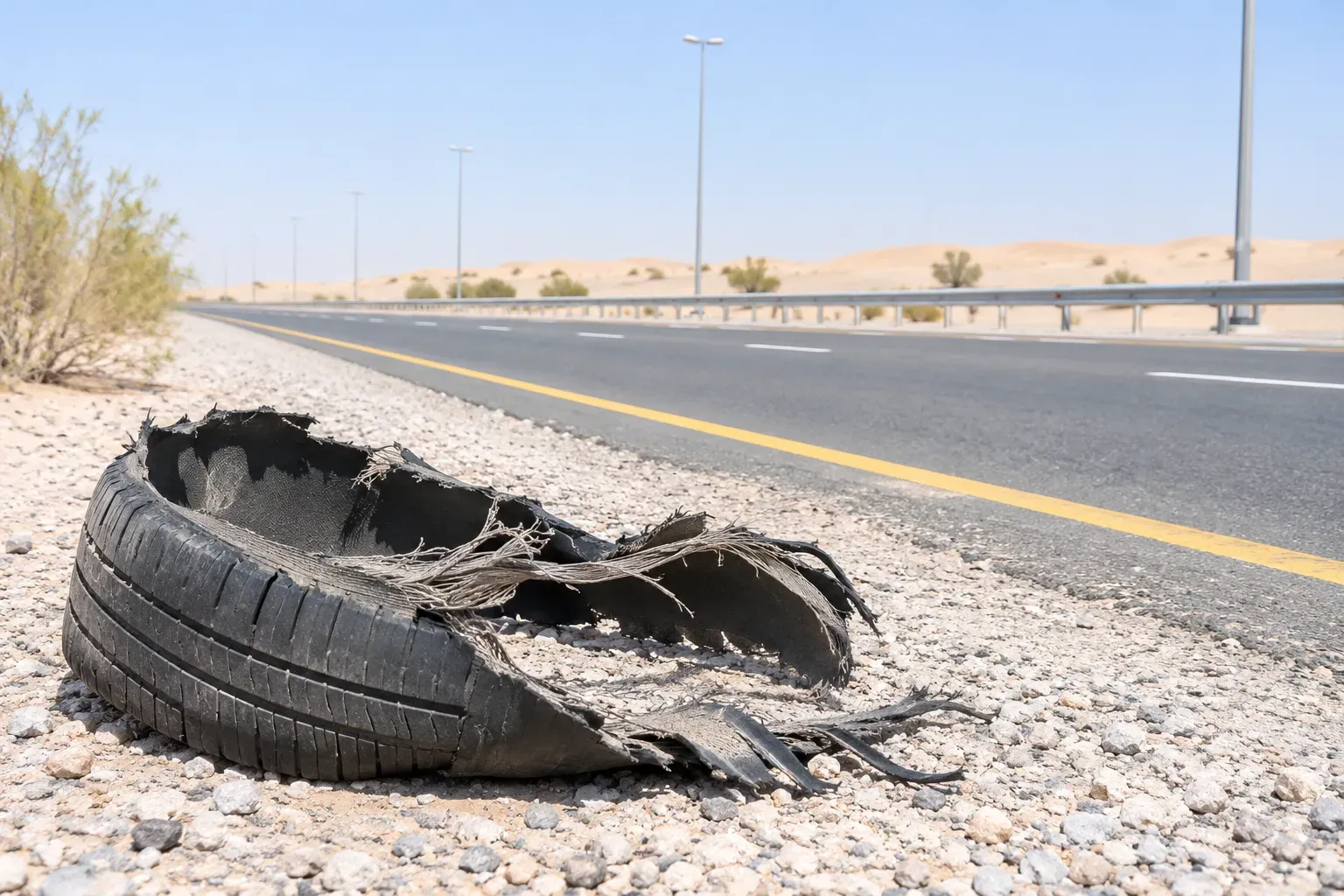
- Look at the sidewalls. Cracks, cuts or a sidewall bulge are serious warnings. A bulge means the tyre should come off the car.
- Compare wear across the tyre. Uneven wear points to a pressure, alignment or suspension issue.
- Notice how the car feels. New vibration, pulling to one side or extra road noise deserve a check.
- Check your spare. A spare tyre ages too, even if it has never touched the road.
If you are not sure what you are looking at, our tyre damage guides show the common problems and whether each can be repaired.
How do you make tyres last longer in the UAE?
Most of the extra life comes from cheap habits. Keep pressure at the door placard figure, measured when the tyres are cold. Park in the shade when you can. Rotate on schedule, balance new tyres and get the alignment checked if the steering feels off. Avoid clipping kerbs when parking, because kerb impacts can damage the internal structure even when the outside looks fine.
I have collected more of these habits in our tyre care guide. None of them takes long, and together they can add meaningful distance to a set.
Do tyres age faster if the car is parked?
They can. A car left outside for weeks keeps its tyres in one position under constant load and direct sun, and the rubber does not get the regular flexing it is designed for. If you travel over the summer, try to park under cover and inflate the tyres to the placard figure before you leave. When you return, check the pressure and look closely at the sidewalls before driving at highway speed. Low mileage is reassuring on a used car, but it tells you nothing about tyre age, so read the date code as well.
Should you replace all four tyres at once?
Not always. If only one tyre is damaged and the others are recent with similar tread depth, a single or paired replacement may be fine. All-wheel-drive cars and many EVs are less forgiving of tread differences, so check your manual first. If all four are close to the age limit, replacing them together is usually the simplest and safest choice.
When it is time, buy from a shop that shows you the DOT date before fitting. You can compare options on our new tyres page, check starting prices on car tyre cost, or ask for fitting at home through our tyre change at home in Dubai service.