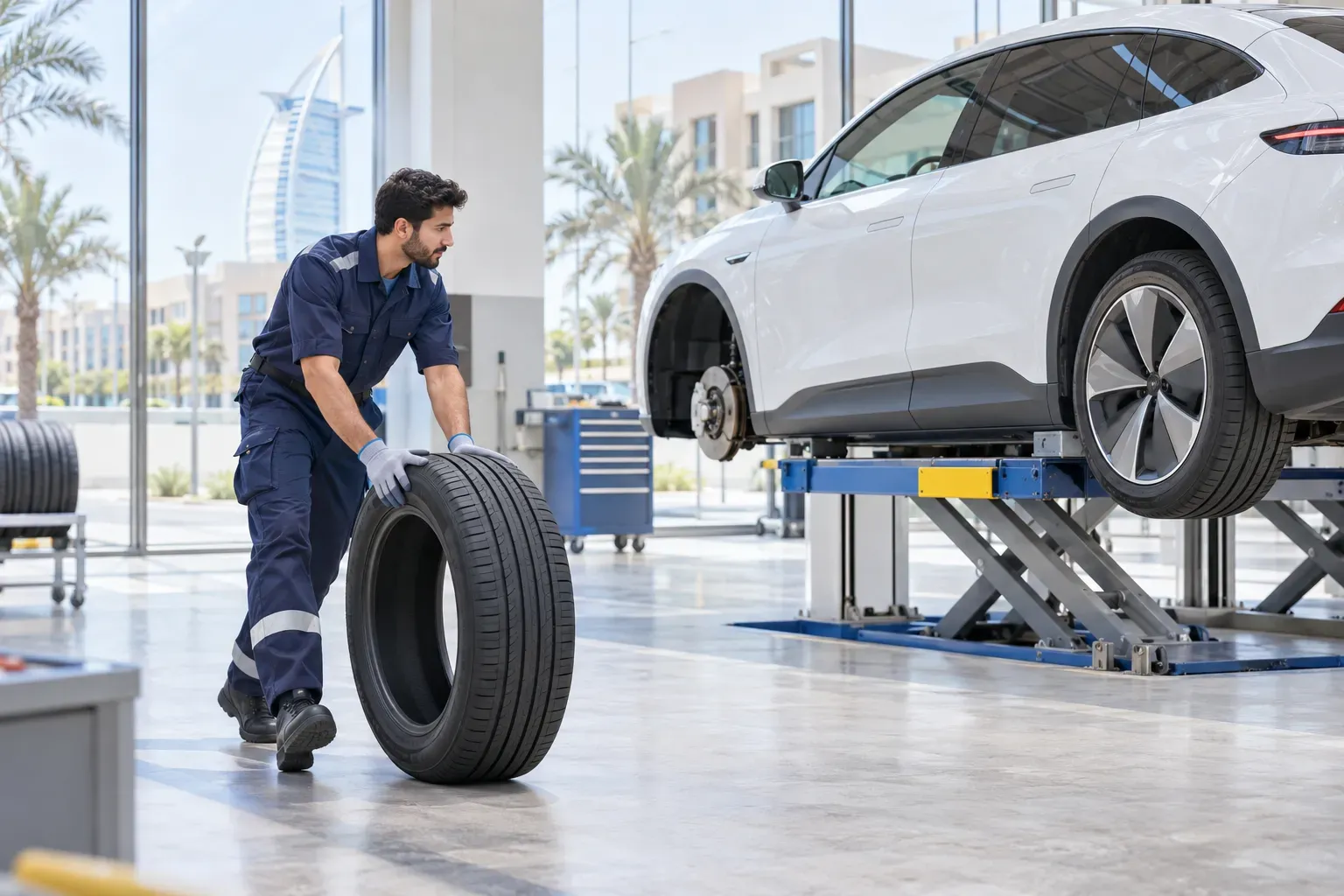
When a tyre needs replacing rather than repairing
A tyre should be replaced when the tread has worn down to the raised wear bars inside the grooves, which sit at 1.6 mm. In wet conditions, grip falls away well before that point, so many drivers change at around 3 mm, especially if they use fast highways such as the E11 and E311.
Damage matters as much as tread. A bulge, a cut into the cords, a sidewall puncture or a tyre that has been driven flat cannot be safely repaired. Heat also ages rubber, so a tyre with good tread can still be finished if it shows cracks or is several years old.
- Tread at or near the wear bars
- Bulge or bubble on the sidewall
- Cracking between the tread blocks
- Puncture in the shoulder or sidewall
- Tyre driven while flat
Replace one, two or all four?
If the other tyres are nearly new, replacing a single damaged tyre is often fine, as long as the replacement matches in size, construction and ideally pattern. If the remaining tyres are part worn, fit a pair on the same axle so both sides have the same grip and rolling diameter.
All-wheel-drive cars and dual-motor EVs are stricter. A big difference in tread depth between axles can strain the drivetrain, so check the owner's manual before replacing one tyre on these vehicles. When a pair is fitted to a two-wheel-drive car, the newer tyres normally go on the rear axle for stability.
Choosing the correct replacement size
The safest choice is the size listed on the placard inside the driver's door, or in the owner's manual. A size such as 235/55 R19 101V tells you width, profile, rim diameter, load index and speed rating. The load index and speed rating should meet or exceed the original.
If you want a different size, keep the overall diameter within about 3 percent of the original. This is the 3 percent rule used by fitters, and it protects speedometer accuracy, clearance and the driver-assistance systems that rely on wheel speed.
Why UAE conditions shorten tyre life
Summer road surfaces in the Emirates get far hotter than the air, and that heat speeds up rubber ageing and raises pressure inside the tyre. Long, fast motorway runs add further heat, while sand and grit wear the tread and can work into small cuts.
Checking pressure when the tyres are cold, parking in shade where you can and rotating on schedule all help. If your tyres are getting old, replacing them before the peak of summer is a sensible way to reduce the risk of a blowout on a hot highway.
What is included
- Size, load and speed rating check
- Old tyre removal and disposal
- New valve where needed
- Wheel balancing
- Torque-wrench refit
- Pressure set to the door placard
How it works
- Send your size or plate photo. Share a photo of the tyre sidewall or your car model on WhatsApp so we can match the right tyre.
- Confirm the tyre and total. You get the options, the fitted price and what is included before any work starts.
- Remove, inspect, fit. The old tyre comes off and the rim, bead seat and valve are checked before the new tyre goes on.
- Balance and torque. Each wheel is balanced, refitted in a star pattern and tightened to the manufacturer's torque figure.
What affects the final price
The figure above is a starting price, not a final quote.
- Rim size and tyre width
- Tyre range and load rating
- Run-flat or foam-lined construction
- Workshop or mobile fitting
- Number of tyres replaced
If you drive an EV
EVs are heavy and deliver torque instantly, so replacement tyres need the right load index, often XL or HL. We lift on the marked points only, keeping clear of the battery pack.