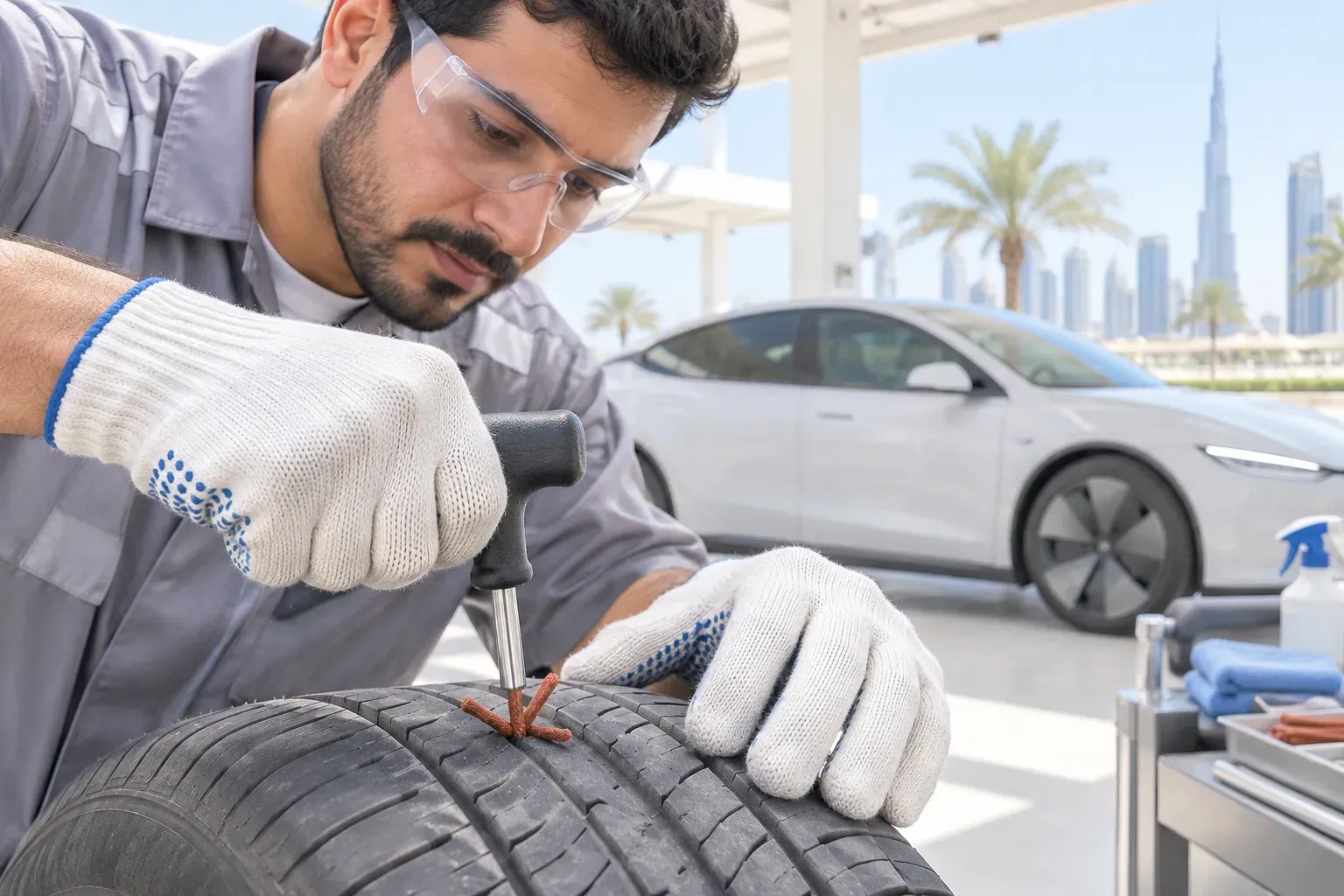
Which punctures can be repaired
The repairable zone is the central part of the tread, away from the shoulders. A single nail or screw in this zone can normally be repaired, provided the hole is small, generally up to around 6 mm, and the tyre has not been run flat.
Two punctures close to each other, or a repair overlapping an old one, are usually not safe. Shoulder and sidewall injuries are also ruled out because those areas flex with every rotation, and a repair there can fail without warning.
- Repairable: small hole in the central tread
- Not repairable: shoulder or sidewall damage
- Not repairable: tyre driven flat
- Not repairable: exposed or damaged cords
Plug, patch or plug-patch?
A plug pushed in from outside is a quick roadside fix, but it does not let anyone see the inside of the tyre. A patch alone seals the inner liner but leaves the injury channel open, so moisture can reach the steel belts.
A combined plug-and-patch fills the channel and seals the liner, and it is the method tyre makers generally recommend. If you have a temporary plug, treat it as a way to reach a workshop rather than a long-term repair.
If you find a nail in your tyre
Leave it in place. The nail is often partly sealing the hole, and pulling it out can turn a slow leak into a flat. Check the pressure, top up if needed and get it looked at as soon as you can.
If the tyre is losing air quickly, do not drive on it. A mobile repair at your location protects the tyre from further damage and can save you the cost of a replacement.
Slow punctures in hot weather
A slow leak can go unnoticed for days, and an under-inflated tyre runs hotter because the sidewall flexes more. On a summer motorway drive, that extra heat is a leading path to a blowout.
If one tyre keeps needing air, or your pressure warning light comes on repeatedly, have it inspected. The cause may be a tiny nail, a leaking valve or corrosion where the tyre meets the rim.
What is included
- Leak location with soapy water
- Internal tyre inspection
- Plug-and-patch repair
- Rebalance after refit
- Pressure set to spec
How it works
- Find the leak. The tyre is checked to locate the object or leak, including the valve and rim edge.
- Inspect from inside. The tyre is removed from the rim so hidden damage can be seen.
- Plug and patch. The injury is cleaned, filled and sealed from inside the tyre.
- Balance and refit. The wheel is balanced, refitted, torqued and leak-checked.
What affects the final price
The figure above is a starting price, not a final quote.
- Number of punctures
- Rim size and tyre profile
- Run-flat or foam-lined tyres
- Workshop or mobile repair
- Sealant cleanup, if used
If you drive an EV
Many EV tyres have a foam liner for noise. A section of foam must be removed neatly before patching, so tell us if your tyre is foam-lined and avoid using sealant.