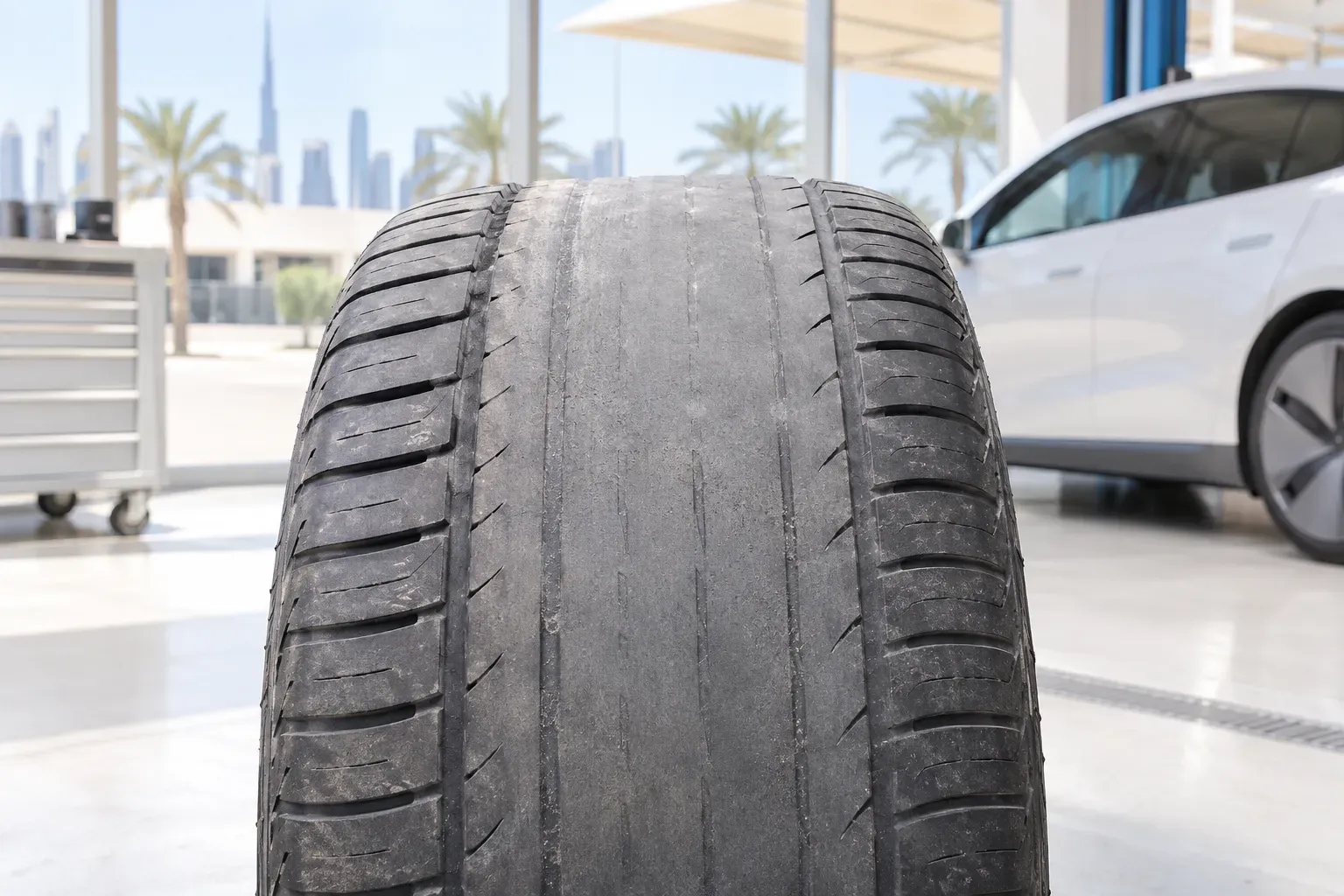
How over-inflation happens
The usual cause is filling to the maximum number printed on the sidewall, which is a limit and not a target. Another is setting pressure in a cool garage, then driving into strong summer heat, where the air inside expands.
What it does to the tyre
Extra pressure rounds the tread, reducing the contact patch.
- Faster wear down the centre
- Less grip when braking and cornering
- A firmer, noisier ride
- Higher chance of impact damage
Should you release air on a hot day?
A tyre that has been driven will read higher than its cold pressure, and that rise is normal. Do not release air from a hot tyre to match the placard, or it may be under-inflated when it cools. Wait until it is cold, then adjust.
The EV range trade-off
Some drivers add pressure to gain EV range. A small gain is not worth the lost grip and uneven wear. Stay with the manufacturer figure, which already balances load, range and safety for your car.
Symptoms to look for
- Tread worn mainly down the centre
- A harsh, bouncy ride
- Longer braking on loose surfaces
- More road noise
The fix
Reset cold pressure to the placard value and check the tread depth across the full width.