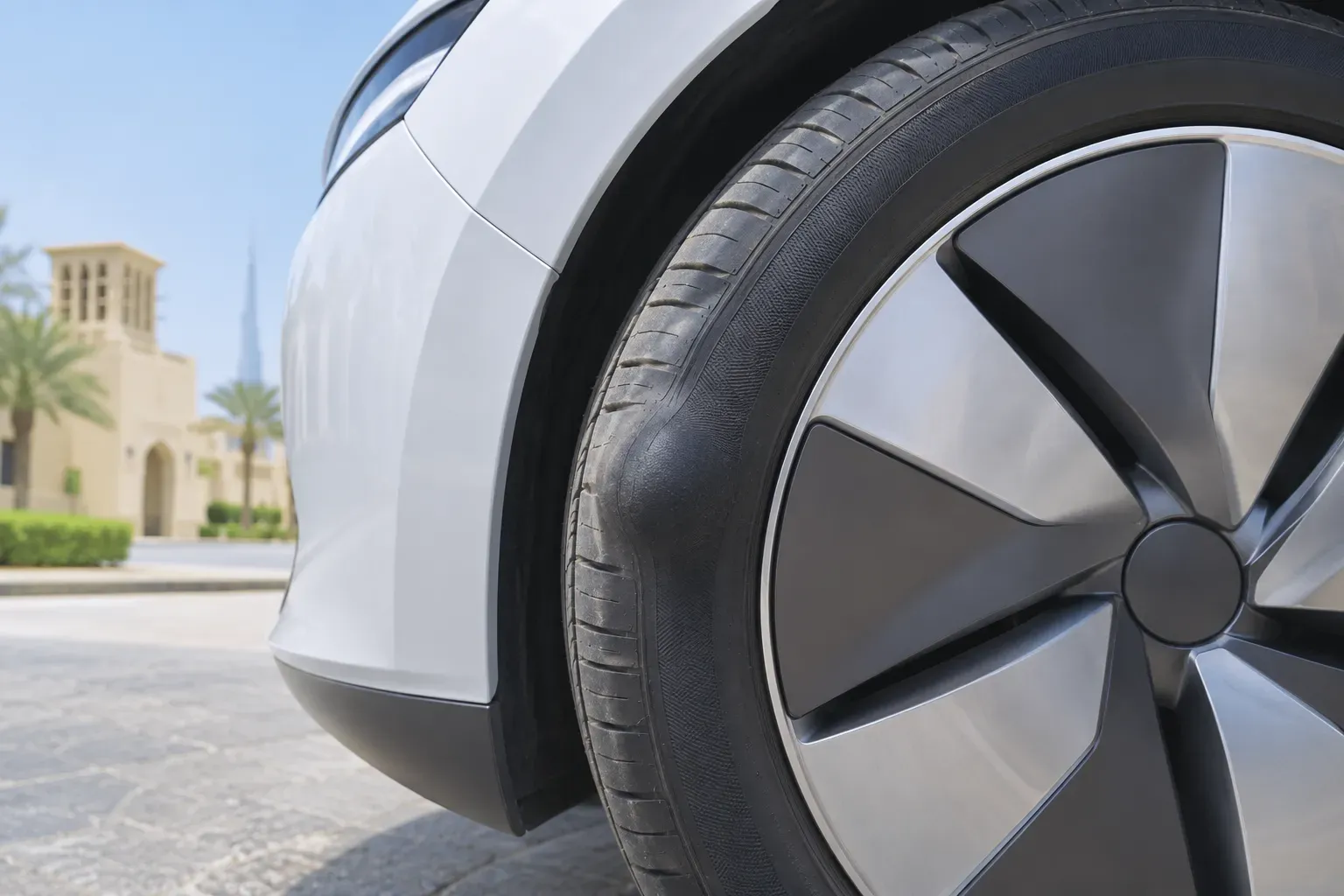
What is happening inside the tyre
The sidewall relies on layers of cord to hold air pressure. A sharp impact can snap those cords while leaving the rubber intact. Air then pushes the weakened spot outward and forms the bubble you can see.
The remaining rubber was never designed to contain that pressure alone, which is why a bulge is treated as a blowout risk.
Common causes on UAE roads
Most bulges trace back to a single impact, often one the driver barely remembers.
- Mounting a kerb while parking
- Speed bumps taken too quickly
- Potholes and raised drain covers
- Low-profile tyres on large wheels
- Driving while under-inflated
Why heat raises the risk
Summer road surfaces get hot enough to raise tyre temperature and pressure noticeably during a long drive. A tyre with broken cords has no reserve left, so a motorway run on a hot afternoon is the worst moment for it to be on the car.
What to do next
Avoid highways, keep your speed low, and fit the spare if your car has one. Many EVs have no spare, so a mobile fitting or recovery is the safer choice. If the tyres on that axle are close in wear, replacing them as a pair keeps handling balanced.
Symptoms to look for
- A rounded bubble on the side of the tyre
- Vibration that grows with speed
- A recent hard hit on a kerb or pothole
- A thumping sound once per wheel turn
The fix
Do not repair it. Fit a spare or arrange a replacement tyre before driving at speed.