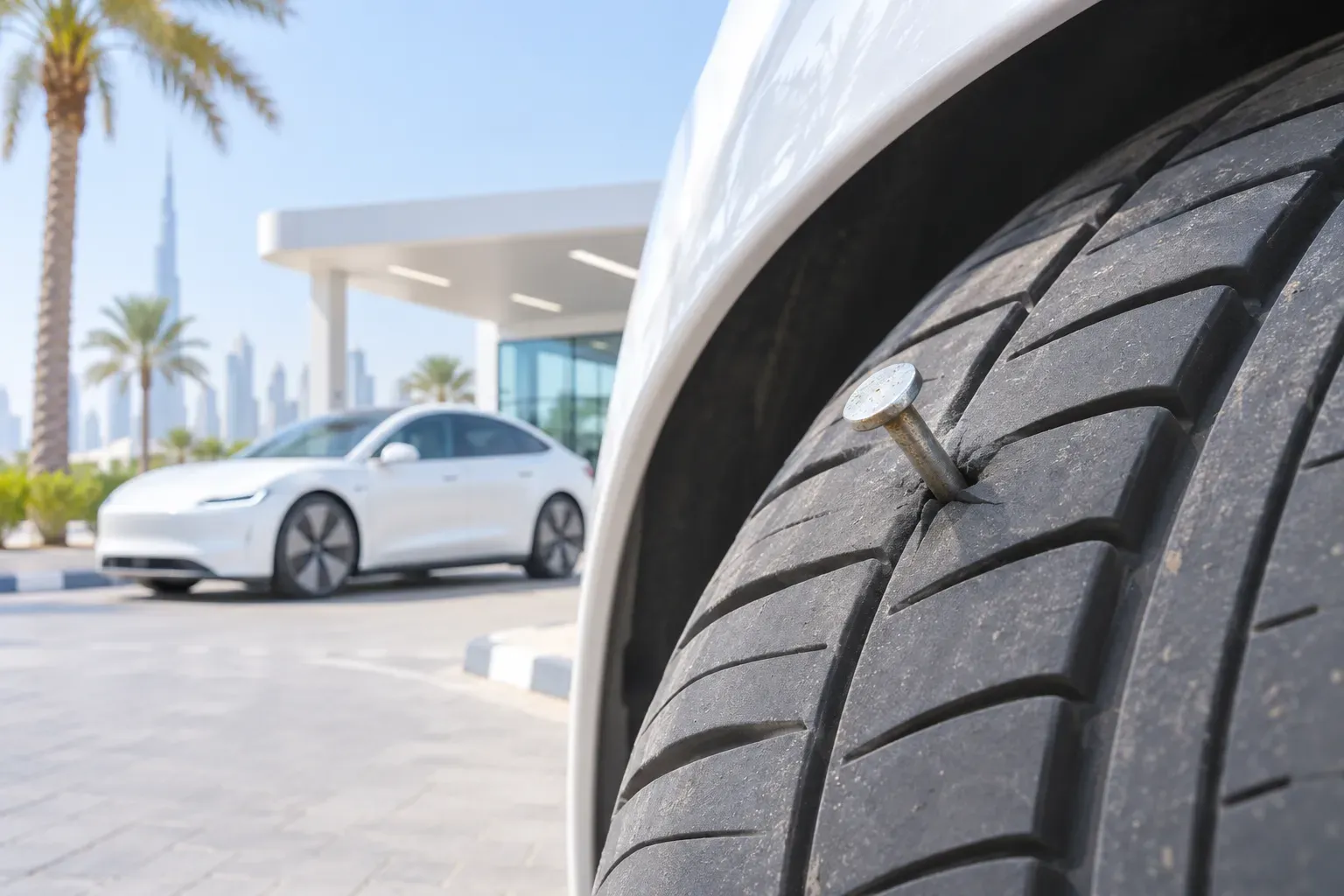
Why you should not pull the nail out
A nail often seals its own hole for a while. Pulling it out on the driveway can turn a slow leak into a flat tyre within seconds, leaving you stranded with no way to inflate it.
Mark the spot with chalk or take a photo, check the pressure, and arrange the repair. If the tyre is holding air, drive slowly and only as far as you need to.
Where a puncture can be repaired
Repairs are normally limited to the central part of the tread, away from the shoulders. Damage in the shoulder or sidewall flexes every time the wheel turns, so a repair there is not considered safe.
- Central tread: usually repairable
- Shoulder: usually not repairable
- Sidewall: replace the tyre
- Several holes close together: replace the tyre
Why the tyre must come off the wheel
The outside of a tyre can look fine while the inner liner is shredded from being driven at low pressure. Only a technician looking inside the casing can rule that out. A combined plug and patch seals both the path of the nail and the inner liner, which is why it is preferred to an external string plug.
Punctures on electric cars
Many EV tyres have a foam layer bonded inside to reduce cabin noise. The foam has to be cleanly cut back around the injury before a patch can bond. EVs are also heavier, so the condition of the casing matters more. Tell the technician your model before the work starts.
Symptoms to look for
- Pressure warning returns days after topping up
- A metal head visible in the tread
- A faint hissing sound when parked
- Bubbles when soapy water is sprayed on the tread
- The car pulls gently toward one side
The fix
Keep the object in the tyre, inflate only if it is safe, and book a plug-patch repair after an internal inspection.